
Language
Views: 0 Author: Site Editor Publish Time: 2026-03-17 Origin: Site


The fixation of magnets and iron cores is very important in machines. It affects how machines work and how long they last. Picking the best method can make machines work better by more than 25%. TAIXIONG has more than 20 years of experience in this area. They give advanced solutions that make machines safer and work better. Magnet type and how you install it help machines run smoothly and stay stable. Regular checks and correct setup are needed for machines to work well every time.
Picking the best way to fix magnets and iron cores can make machines work over 25% better. Mechanical fixation gives strong support and is easy to fix, so it works well for transformers that move. Adhesive bonding makes a strong, water-resistant hold. It is good for places with high heat and helps things last longer. Encapsulation keeps magnets and cores safe from damage. This makes them last longer and stay stable in tough places. Doing regular checks and picking the right materials is very important. This stops problems like losing magnetism and keeps transformers working well.

Image Source: unsplash
Fixing magnets is important for making machines work well. Using the right method helps the transformer core stay strong. TAIXIONG gives many ways to fix magnets. They use new technology and good materials.
Mechanical fixation uses parts to keep magnets in place. Some common ways are screws, clamps, and brackets. These parts push the magnet against the iron core. This method is easy and lets you remove or change magnets. Many transformers use mechanical fixation because it gives strong support. It keeps the core steady when the machine is running. Mechanical fixation is good when the core moves or shakes. TAIXIONG makes mechanical systems for different transformer cores and iron cores.
Adhesive bonding uses glue to stick magnets to the core. This method spreads force and lowers stress on the magnet. Epoxy adhesives are used a lot because they make a strong bond. They also keep out water. In places with high heat, silicone, polyimide, and special epoxy adhesives are best. These adhesives stay strong above 150°C. They are used in transformers for cars, planes, and factories. Silicone adhesives can handle very hot and cold temperatures. This makes them good for transformer cores that face heat and cold. TAIXIONG uses special adhesives so magnets stay fixed for a long time.
Encapsulation and potting cover the magnet and core with a layer. This layer can be made from epoxy, metal sleeves, or other stuff. Encapsulation keeps out water, dust, and chemicals. It also protects the transformer core from shocks and shaking. Potting fills all spaces around the magnet and makes the core stronger. The table below shows how different methods help durability:
| Method | Benefits |
|---|---|
| Metal Sleeve | Stops outside corrosion and handles spinning stress. It keeps things working in tough places. |
| Vacuum Potting Design | Makes the core stronger against shocks. It keeps the core safe when hit, moving fast, or under pressure. |
| Epoxy Molding Compounds | Protects circuits from water, heat, and shocks. It helps things last longer in hard places. |
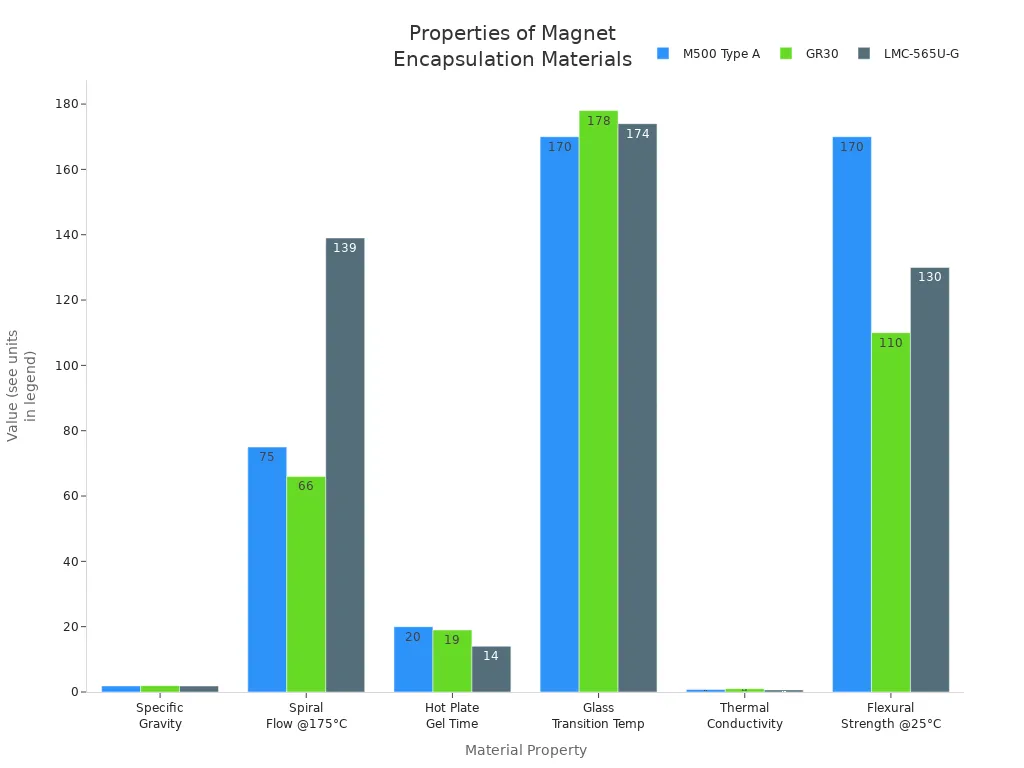
Many transformer cores use encapsulation to last longer. The material you pick changes how the core handles heat and force. The table below compares common encapsulation materials:
| Property | M500 Type A | GR30 | LMC-565U-G |
|---|---|---|---|
| Specific Gravity | 1.87 | 1.94 | 1.85 |
| Spiral Flow @175°C | 75 cm | 66 cm | 139 cm |
| Hot Plate Gel Time @175°C | 20 sec | 19 sec | 14 sec |
| Glass Transition Temperature | 170 °C | 178 °C | 174 °C |
| Thermal Conductivity | 0.8 W/m·K | 1.0 W/m·K | 0.65 W/m·K |
| Flexural Strength @25°C | 170 MPa | 110 MPa | 130 MPa |
| Flame Retardancy | V-0 | V-0 | V-0 |
TAIXIONG uses new encapsulation and potting ways to protect transformer cores in tough places. Injection molding is a modern way to encapsulate. It uses special materials to make a strong shell around the core. This process helps the transformer core handle heat and stress.
Magnetic force fixation uses the magnet’s pull to hold it to the core. This method does not need glue or screws. It is used in electric motors, synchronous machines, brushless DC motors, and traction motors in electric cars. Magnetic force fixation lets designers change things easily. It can lower noise and shaking in the transformer. It works best when the core is flat and ferromagnetic. But the magnet’s strength can change if the transformer gets wet or very hot or cold. Neodymium magnets need a coating to stop rust. TAIXIONG gives solutions that use magnetic force fixation for special transformer core designs.
Tip: For the best results, always match the fixation method to the transformer core type and where it will be used. TAIXIONG can help pick the right method for each job.
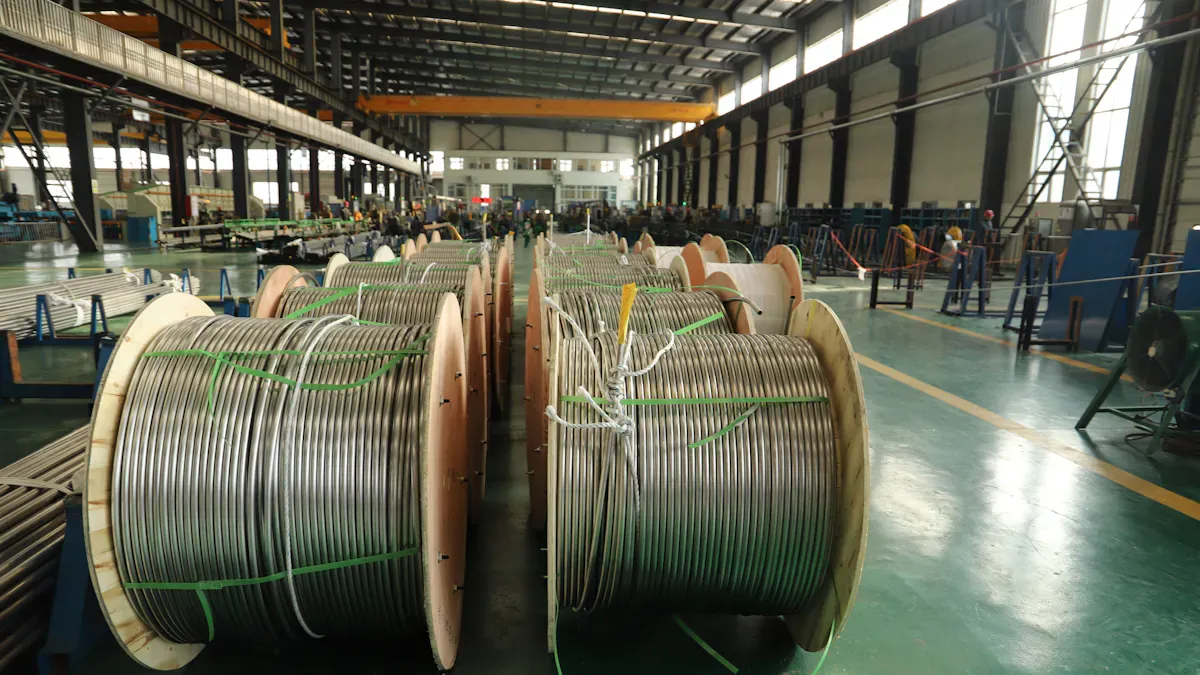
Image Source: pexels
The fixation of magnets and iron cores is a key part of transformer core design. The way the iron core is fixed affects how well the transformer works, how long it lasts, and how safe it is. TAIXIONG has many years of experience making transformer cores. The company uses advanced methods to make sure each core is strong and works well in many types of transformers.
Laminations are thin sheets of steel stacked together to make the iron core. These sheets help lower energy loss in the transformer. When a transformer works, a changing magnetic field creates small currents inside the core. These are called eddy currents. If the laminations are thick, these currents get bigger and waste more energy. Using thin laminations, like 0.35mm or 0.5mm, helps stop this problem.
| Lamination Thickness | Designation |
|---|---|
| 0.35mm | M36 |
| 0.5mm | M47 |
Thinner laminations reduce eddy current losses. This makes the transformer more efficient. Eddy current losses also depend on how the core is stacked. Good stacking means the sheets fit tightly together. This helps the magnetic field flow better and lowers losses. TAIXIONG uses high-grade steel and careful stacking to make sure each transformer core works at its best.
Stacking factor is another important idea. It shows how much of the core is made of steel and how much is air. A high stacking factor means more steel and less air, which helps the transformer work better. Some ways to improve stacking are:
Use high-grade CRGO steel for lower losses.
Stack the laminations in an interleaved way for better magnetic flow.
Add varnish or anti-vibration coating to the core.
Make sure the core is earthed at one point only.
Use epoxy-coated pads for insulation.
These steps help lower core losses and make the transformer last longer.
Clamping and fastening keep the iron core tight and steady inside the transformer. If the core is loose, it can vibrate and make noise. It can also wear out faster. Clamps are made from different materials, each with its own use.
| Clamp Material | Pros | Where to Use |
|---|---|---|
| Mild Steel | Strong, cost-effective | General-purpose transformers |
| Galvanized Steel | Rust-resistant, good insulation | Outdoor units |
| Stainless Steel | Long life, high strength | Coastal or humid regions |
The thickness of clamp plates is often 8 mm for galvanized steel. Bolts like M16 or M20 are used to hold the core together. Good clamping stops the laminations from moving. This keeps the transformer quiet and safe. If the clamping is too loose, the core can rattle and make more noise. If it is too tight, it can damage the core.
Note: Poor stacking or loose clamping can make the transformer noisy. Vibrations from the core and windings can spread to other parts and make the noise worse. Tight stacking and good clamping help keep the transformer quiet.
TAIXIONG uses special clamping systems to make sure each iron core stays in place. The company also uses anti-vibration coatings and single-point earthing to improve safety and performance.
Welding is another way to fix the iron core. It joins parts of the core together to make a strong bond. Welding is used in large transformers where the core must not move at all. It gives high strength but must be done carefully so the core does not get damaged by heat.
Injection molding is a modern way to fix the iron core. It uses thermosetting or thermoplastic materials to make a shell around the core. This shell holds the laminations in place and protects the core from water, dust, and shocks. Injection molding also helps the transformer handle changes in temperature and stress. TAIXIONG uses both thermosetting and thermoplastic injection molding to make strong and safe transformer cores.
Some benefits of injection molding for transformer core fixation are:
It gives a tight fit for the laminations.
It protects the core from outside damage.
It helps the transformer last longer in tough places.
TAIXIONG leads the way in using these new methods. The company’s patented technologies help make transformer cores that are strong, safe, and efficient for many uses.
Tip: Always choose the right fixation method for the transformer core and where it will be used. TAIXIONG can help pick the best way for each job.
Picking the right materials is important for safety. It also helps the magnets and iron cores last longer. Materials can react with each other and change how the core works. Here are some things to remember:
Material compatibility keeps magnetic devices safe. This is important where people or sensitive equipment are nearby.
Some sterilization methods can change magnetic properties. So, you must choose materials carefully.
Over time, materials can break down or lose iron. This affects how the core works.
Regular checks help find problems early. They also help improve the design.
TAIXIONG always thinks about how parts work together. This keeps the core strong and reliable.
Temperature changes make materials expand or shrink. If the magnet, adhesive, or sleeve expand at different rates, stress builds up. This stress can cause cracks or delamination. It can even cause demagnetization. The table below shows what happens when materials expand differently:
| Material | Expansion Rate | Possible Issue |
|---|---|---|
| Magnet | High | Cracks, distortion |
| Adhesive | Medium | Delamination |
| Sleeve | Low | Dimensional changes |
TAIXIONG uses high-grade electrical steel to lower thermal stress. They use careful manufacturing and tight compression of laminations. Good core design helps stop overheating and keeps efficiency high.
Transformers face vibrations at many frequencies. These can be 101.55 Hz, 199.70 Hz, or up to 600.53 Hz. Vibrations shake the core and affect how stable it is. Most vibration energy is on the sides and top of the transformer tank. If the core is not fixed well, it can move or make noise. It can also wear out faster. TAIXIONG designs systems to keep the core stable. This reduces unwanted movement during operation.
Tip: Stable fixation lowers noise. It helps the transformer run smoothly.
Maintenance keeps the core and magnets working well. Adhesive and encapsulated fixations are hard to repair. Potting methods need adhesives that flow into small gaps. Early methods used low-viscosity adhesives and extra fixtures. This made the process slow. Vacuum potting needs more cleaning and fixtures. This slows down mass production. Sometimes, adhesives seep between laminations and cause failures. TAIXIONG makes designs that are easy to maintain. They help customers keep their magnetic equipment in good shape.
Note: Regular maintenance and smart design choices help the core last longer. They also improve efficiency.
Demagnetization is a big problem in transformer construction. It can make transformers work less well and hurt the transformer core. Many things can cause demagnetization. High inrush currents or sudden magnetic field changes are common causes. Engineers use different ways to stop this from happening. The table below lists some top ways to prevent demagnetization in transformers:
| Strategy | Description |
|---|---|
| Controlled Switching | Matches circuit breaker closing with the voltage wave to lower flux offset. |
| Pre-Insertion Resistors | Adds resistance during start-up to reduce the first surge before full contact. |
| Sequential Energization | Turns on transformers one after another to avoid large inrush currents. |
| Residual Flux Management | Turns off transformers in a controlled way to lower leftover magnetism. |
| System Design Adjustments | Picks transformers with lower core flux density and adds source impedance to limit inrush current. |
TAIXIONG uses these ways to keep transformer cores strong and steady.
Core losses are a big worry in transformer construction. These losses include eddy current losses and hysteresis losses. Laminations help lower eddy current losses by breaking up current paths in the core. Using high-permeability, low-loss steel can bring core losses below 0.90 W/kg at 1.7 T and 50 Hz. Amorphous alloys and nanocrystalline materials can lower core losses even more. Sometimes they reach 0.7 W/kg at 1.5 T and 50 Hz. Laminations also help cut iron losses and make transformers work better. TAIXIONG uses advanced laminations and stacking to keep magnetic losses low.
Laminations help lower eddy current and hysteresis losses.
Amorphous alloys and nanocrystalline materials cut core losses at high frequencies.
Good stacking and insulation help lower transformer core losses.
Reliability is very important in transformer construction. The transformer core must stay fixed while working. Vibrations, temperature changes, and outside forces can move the core. TAIXIONG uses special technologies to keep the core in place. Laminations, clamping, and injection molding all help keep transformers safe. Regular checks and smart design choices lower the chance of failure. These steps help transformers work well and cut magnetic losses. A reliable transformer means less downtime and better performance.
Tip: Always use the right fixation method for the transformer core and check for signs of wear. TAIXIONG’s experience in transformer construction helps customers get the best results.
Picking the right way to fix magnets and iron cores is very important. It helps machines stay strong and safe. Some usual ways are mechanical fixation, adhesive bonding, encapsulation, and injection molding. Each way has its own good points.
TAIXIONG gives expert help and many products for different needs. For safer and better machines, trust TAIXIONG’s skills. Always choose the best way for your machine. Check it often to make sure it works well.
Core design decides how a transformer works. It affects how steady the voltage is. It also affects how much energy is lost. Good core design helps the magnetic circuit work well. Engineers use core design to keep voltage steady and make transformers last longer.
Voltage changes how strong the magnetic circuit is. High voltage can make the core get hot. Low voltage can make the transformer less efficient. The right voltage keeps the magnetic circuit balanced. Core design helps control how voltage moves in the transformer.
Core design controls how voltage flows in a transformer. A strong core design keeps voltage steady. It helps the magnetic circuit handle changes. Good core design lets the transformer work safely at different voltages.
Engineers look at what voltage is needed. They check the size and safety. They pick a core design that fits the magnetic circuit. The right core design helps the transformer handle voltage changes. It keeps the magnetic circuit strong and efficient.
Bad core design can cause voltage drops or overheating. The magnetic circuit may not work well. This can make the transformer fail. Good core design helps avoid these problems. It keeps voltage and the magnetic circuit working right.


