
Language
Views: 0 Author: Site Editor Publish Time: 2026-01-19 Origin: Site


Passive magnetic bearings use permanent magnets to hold moving parts. These bearings make a magnetic field that lifts and supports parts. This lets the parts spin smoothly. The main job is to lower friction and stop wear. They do this by removing direct contact. Contact-free levitation makes passive magnetic bearings special. Many industries use this technology. They like it because it works well and is dependable.
| Sector | Application | Unique Benefits |
|---|---|---|
| Aerospace | Jet engines, turbines, spacecraft systems | Stops friction, saves energy, lowers wear and tear |
| Automotive | Electric vehicle motors | Less friction, works well, helps save energy |
| Energy Generation | Turbines, compressors, pumps | Makes machines last longer, costs less to fix, works better |
| Industrial Manufacturing | Precision machinery, motors, robotic systems | Machines work more, costs less to fix |
| Oil and Gas | Pumps, compressors, turbomachinery | Works without oil, less downtime in far places |
Passive magnetic bearings use permanent magnets to lift moving parts. They help support these parts and lower friction and wear.
These bearings work without oil or grease, so they are easier to take care of. This also helps the environment.
They last a long time and are very reliable. Machines can run well for many years without new parts.
Engineers make passive magnetic bearings to handle different weights and speeds. This makes them useful in many types of jobs.
Picking passive magnetic bearings can save money over time. They last long and need less fixing.
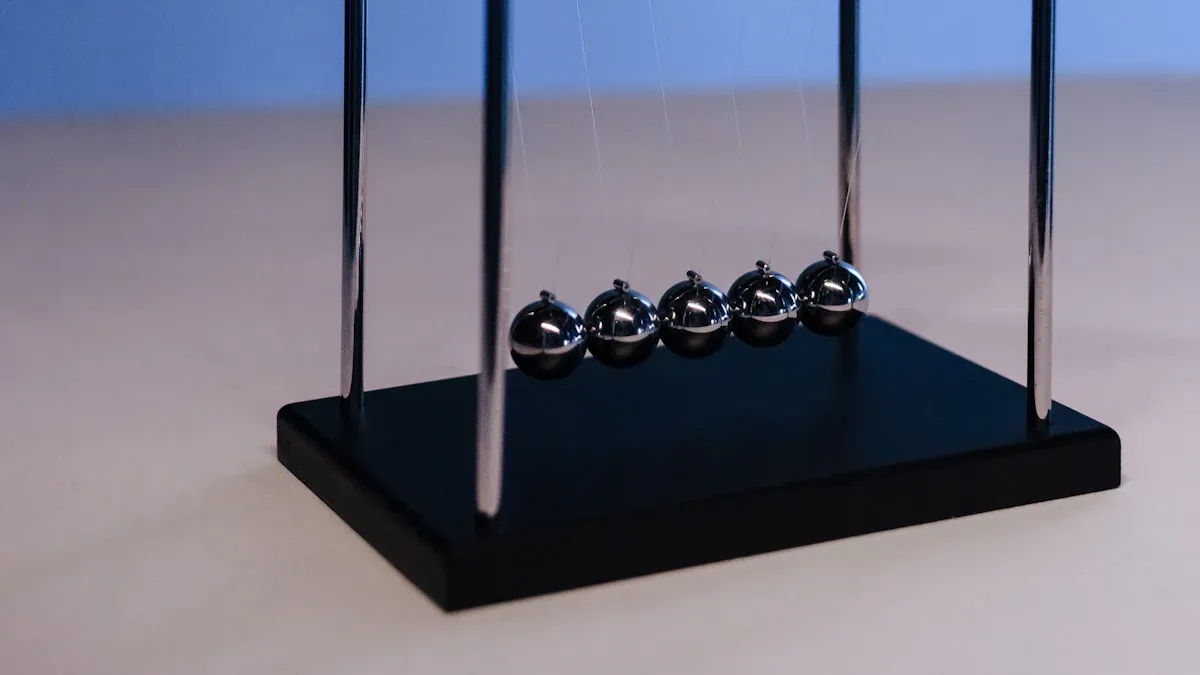
Image Source: pexels
Passive magnetic bearings use permanent magnets to hold moving parts up. The magnets are put on both the rotor and stator. Both magnets have the same side facing each other. This makes a strong push between them. The push lifts the rotor and keeps it floating. The rotor can spin inside the magnetic field. There is no rubbing between the rotor and stator. This is not like regular bearings, which need to touch to work. Passive magnetic bearings do not need sensors or controllers. They use the natural power of magnets. This makes the design easy and saves energy. Active magnetic bearings use electromagnets and controls to keep the shaft steady. Passive magnetic bearings only use permanent magnets and magnetic fields to hold the rotor.
Tip: People pick passive magnetic bearings because they are simple and use little power.
Magnetic levitation happens when the rotor floats in the magnetic field. The magnets on the rotor and stator push away from each other. This push is strong enough to lift the rotor. The magnetic fields make a space where the rotor does not touch anything. The rotor can spin very fast with almost no resistance. This is how magnetic bearings cut down friction and wear. The magnetic field also helps keep the rotor in the middle. The design uses the right setup of magnets to keep the rotor balanced. Making passive magnetic bearings better means putting magnets in the best spots and using the right strength. This helps the bearings work better and be more efficient.
| Feature | Passive Magnetic Bearings | Active Magnetic Bearings |
|---|---|---|
| Power Consumption | None | Yes |
| Control System | Not Needed | Needed |
| Friction | Very Low | Very Low |
| Complexity | Simple | Complex |
| Magnetic Field Source | Permanent Magnets | Electromagnets |
Stability is very important for passive magnetic bearings. Earnshaw’s theorem says magnets alone cannot keep another magnet steady in every way. Designers use special tricks to fix this problem. Sometimes, they add a center post or jewel-type bearing to hold the rotor. NASA used this idea in their G2 flywheel for storing energy in space. Some designs use Halbach arrays, which are special ways to arrange magnets. These arrays make strong magnetic fields and help keep the rotor steady. When the rotor spins, the magnetic forces make it stiff and stop it from moving too much. This keeps the rotor from shifting out of place. Studies and computer tests show these designs work well in real life. Engineers also use mechanical parts to help keep the rotor steady when it is not spinning or is moving slowly.
Permanent magnets are put on the rotor and stator to hold the rotor up.
The magnets are set up to lift the rotor and keep it in the middle.
Magnetic forces make a safe spot for the rotor to float.
The rotor stays in the middle even when the load or speed changes.
No touching means less friction and less heat.
Passive magnetic bearings work well and last a long time. Their stability comes from smart design and careful magnet placement. Engineers keep making these bearings better for many uses.
Image Source: unsplash
Passive magnetic bearings have a few key parts. The most important part is the permanent magnet. These magnets go on both the rotor and stator. Most magnets in these bearings look like rings with flat sides. Engineers pick axially magnetized magnets because they work better than radial ones. The magnets need to be strong enough to lift the rotor and keep it steady. Materials with high remanence and coercivity help make the magnets powerful and dependable.
The table below lists the main parts and materials in a passive magnetic bearing:
| Component/Material | Description |
|---|---|
| Permanent Magnets | Used in both fixed and moving parts, usually ring-shaped with flat sides. |
| Magnetization | Axially magnetized for better results than radial magnetization. |
| Magnetic Materials | Materials with high remanence and coercivity are needed for strong magnetic force. |
| Design | Can handle loads from the sides and ends in both ways. |
| Analysis Method | Engineers use 3D finite element method (3D FEM) to study magnetic fields. |
Engineers use the 3D finite element method to see how magnetic fields act inside the bearings. This helps them make the design and performance better.
Magnetic bearings come in different types and setups. The most common type is the radial bearing. Radial bearings hold the shaft from the sides and keep it in the middle. Axial bearings hold the shaft from the ends. Some designs use both radial and axial bearings together for more stability.
Note: Halbach arrays are special ways to arrange magnets. They make the magnetic field stronger and more focused. This helps the bearings work better and last longer.
Some magnetic bearings use both permanent magnets and mechanical supports. These supports help keep the rotor steady when it is not spinning. Engineers can change the shape and size of magnets to fit different machines. The best setup depends on the load, speed, and use. Magnetic bearings are used in many machines because they lower friction and help things work better.
Passive magnetic bearings are made to handle different loads and speeds. Their flexibility makes them useful in many industries. Engineers keep finding new ways to make these bearings stronger and work better.
Magnetic bearings let machines move with almost no friction. The rotor floats in a magnetic field and does not touch anything. This means less heat is made inside the machine. Machines can spin faster and more smoothly. Less friction helps parts last longer. Many companies use magnetic bearings to make their machines work better and last longer.
Machines with magnetic bearings often run better and break less. This helps companies save both time and money.
Magnetic bearings do not need oil or grease to work. The magnets keep the moving parts apart, so no lubrication is needed. This makes it easier to take care of machines and costs less money. It is also better for the environment. Without oil, there are fewer spills and less pollution. The table below shows how magnetic bearings help the environment:
| Environmental Benefit | Description |
|---|---|
| Elimination of Lubrication | Magnetic bearings do not need oil or grease, so they help the environment by using fewer chemicals. |
| Maintenance-Free Operation | No oil means less fixing is needed, so there is less waste and fewer resources used. |
Many factories use magnetic bearings to keep machines clean and safe. Less fixing means workers spend less time on repairs.
Magnetic bearings help machines use less energy. With no friction, motors and rotors spin more easily. This makes machines work better and use less power. Magnetic bearings last longer than regular bearings. They do not wear out fast because the parts do not touch. Machines can run for many years without needing new bearings. Companies like magnetic bearings because they help machines stay strong and work well.
Magnetic bearings are a smart choice to help machines last longer and work better.
Magnetic bearings have many good points, but they also have some problems with staying steady. The biggest problem comes from how permanent magnets act. When magnetic bearings use repelling magnets, they can stay steady up and down. But they can become wobbly from side to side. This means the rotor might slide sideways if nothing stops it. Engineers need to add extra forces to keep the rotor in the middle.
Some usual stability problems are:
| Stability Issue | Description |
|---|---|
| Reduction in magnetic strength | The magnetic force gets weaker and cannot hold the bearing well. |
| Non-uniform magnetic fields | The magnetic field is not the same everywhere in the bearing. |
| New pole formation | Extra magnetic poles show up and make the bearing less steady. |
| Fracture of magnets | Magnets can break, which makes the bearing lose support and balance. |
To fix these problems, engineers put small magnets together to make bigger and stronger shapes. This way, the magnets are less likely to break and the bearing gets stronger. Engineers must design and test the bearings carefully to make sure they stay steady when working.
Magnetic bearings also have trouble holding heavy things. These bearings need to hold up big parts while keeping them floating. Sometimes, the magnets are not strong enough for heavy loads. This means magnetic bearings cannot be used everywhere.
New ideas have helped make load capacity better. For example:
Permanent magnetic thrust bearings (PMTBs) can hold heavier loads and shake less.
Engineers use tests and models to see how well these bearings stop shaking.
New types, like radial alternating magnetized PMTBs, make the magnetic force stronger.
Finite element analysis helps check how stiff and strong the bearings are.
Curved magnets and new ways to magnetize also help the bearings hold more weight.
Even with these new ideas, magnetic bearings can still cost a lot to make and design. Good magnets and hard ways to build them make the price go up. Fitting them into old machines and needing special parts can make putting them in harder. Even with these problems, magnetic bearings keep getting better and are used in more places.
Passive magnetic bearings are used in many industries. These bearings help machines by lowering friction and wear. You can find magnetic bearings in turbines, pumps, and motors. They are important for machines that need to spin fast and work well. Many factories use magnetic bearings because they let parts spin without touching. This means there is less damage and the machines last longer.
Some ways magnetic bearings are used are:
Power generation: Turbines and compressors use them to spin smoothly.
Automotive: Electric cars use these bearings to run quietly and well.
Aerospace: Jet engines and spacecraft need bearings for high speeds.
Manufacturing: Robots and precise machines use them for accurate moves.
Oil and gas: Pumps and compressors in far places need less fixing.
These uses show how magnetic bearings help save energy and money in many fields.
TAIXIONG is a top company in magnetic equipment. The company has made magnets and magnetic systems for over 14 years. TAIXIONG makes neodymium magnetic bearings for many machines. These bearings are used where parts must spin without touching. This helps machines run smoother and last longer. TAIXIONG’s products are used in turbines, pumps, and motors. They help machines be quiet and use less power.
TAIXIONG has many magnetic solutions:
Permanent magnet bearings for fast machines
Halbach array designs for strong and focused fields
Custom magnetic systems for special needs
TAIXIONG’s team uses smart design tools to make good products. The company sells magnetic bearings to steel, car, electronics, and chemical companies. TAIXIONG works hard to make new and high-quality products. This makes them a trusted partner for companies that need good magnetic bearings.
The table below shows TAIXIONG’s place in the market:
| Company Name | Rating | Experience (Years) | MOQ (Pieces) | Product Focus |
|---|---|---|---|---|
| Taixiong | 4.8 | 14 | 1000 | Permanent Magnet Bearings, Halbach Array |
TAIXIONG helps companies do better with magnets. Their products make machines work well and cost less.
Picking the right bearing depends on what you need. Passive magnetic bearings have many good points compared to others. The table below shows how magnetic bearings, active magnetic bearings, and mechanical bearings are different:
| Bearing Type | Cost Considerations | Maintenance Needs | Performance Characteristics |
|---|---|---|---|
| Magnetic Bearings | Lower long-term costs due to no wear | Electronics may require maintenance | Superior stability, no friction, long lifespan |
| Active Magnetic Bearings | Higher initial costs due to complexity | Regular maintenance for active control systems | Excellent for extreme speeds (>100,000 RPM) |
| Traditional Mechanical Bearings | Generally lower initial costs | Regular lubrication and part replacements | Limited performance at high speeds |
Passive magnetic bearings cost less over time because they do not wear out fast. They need less fixing since there is no oil or grease. These bearings are stable and quiet, which is good for fast machines. Active magnetic bearings are good for very high speeds but cost more and need more checks. Mechanical bearings are cheaper at first but need more repairs and cannot go as fast.
Note: This shows why many companies pick magnetic bearings for tough jobs.
Passive magnetic bearings are changing how industries use magnetic bearings. TAIXIONG’s skills and products make it a great choice for companies that want strong and efficient magnetic bearings.
Passive magnetic bearings give modern machines many special benefits. They help machines work well and stay safe. Here are some of the main advantages:
| Benefit | Description |
|---|---|
| High Reliability | Works the same every time because parts do not touch |
| Unlimited Lifetime | No wearing out, so they last a long time |
| Reduced Friction | Uses less energy and works better |
| No Contamination | No oil needed, so machines stay clean |
TAIXIONG keeps making new and better products. In the future, machines will be even safer and work better.
A passive magnetic bearing uses permanent magnets to hold moving parts. The magnets make a force that lifts the rotor up. This stops the parts from touching each other. Less touching means less friction.
No, passive magnetic bearings only use permanent magnets. They do not need any electricity to work. The magnets alone keep the rotor floating.
Engineers put passive magnetic bearings in turbines, pumps, and motors. They are also used in spacecraft. These bearings help machines last longer and run better.
Passive magnetic bearings do not need oil or grease. This means there is less pollution and fewer spills. Machines stay cleaner and are safer for people.


