
Language
Views: 0 Author: Site Editor Publish Time: 2025-12-22 Origin: Site


Many factors influence how magnetic domains align in magnets. These factors include physical forces, environmental changes, and even air pollution. New research indicates that anthropogenic air pollution and electromagnetic fields can alter domain patterns, which in turn can affect the functionality of magnets. The table below highlights some significant factors:
| Factor | Description |
|---|---|
| Anthropogenic Air Pollution | Has a substantial influence on the arrangement of magnetic domains, particularly in urban areas. |
| Electromagnetic Fields | Affect the behavior of magnetic domains across various systems. |
| Ultrafine Magnetic Particles | Can interact with cells and may pose increased health risks. |
TAIXIONG employs innovative magnetic technology to address these challenges in the industry.
Magnetic domains line up with outside magnetic fields. This makes the material stronger. It also makes it more stable.
Changes in temperature can mess up domain alignment. Magnets lose strength if they get hotter than the Curie temperature.
What the material is made of and its crystal shape matter. These things decide the size and shape of magnetic domains. This affects how strong the magnet is.
Mechanical stress can change how domains act. This can change how well the magnet works. It can also change how long it lasts.
Fewer impurities and defects help keep domains steady. This makes magnets stay strong and work well.
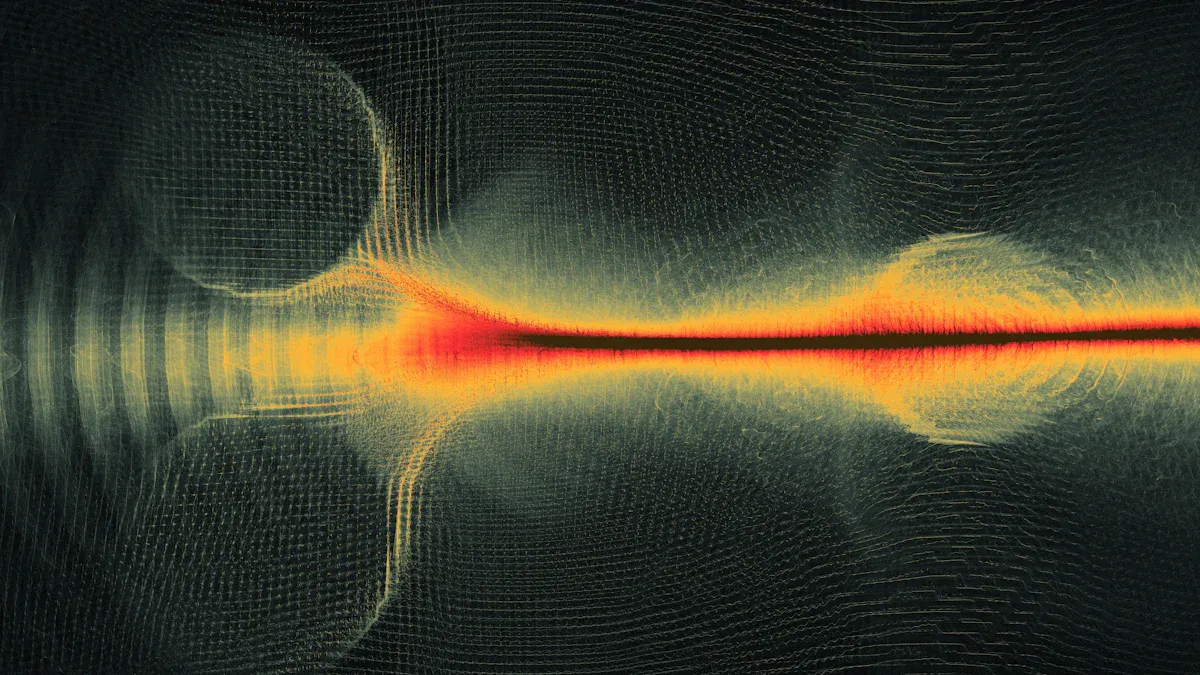
Image Source: unsplash
External magnetic fields are very important for magnets. They help magnetic domains inside magnets line up. When a ferromagnetic material gets an external magnetic field, the domains start to move. They turn and point in the same direction as the field. This keeps happening until the material is fully magnetised. At this point, almost all domains face one way. The material becomes a strong magnet and does not lose its magnetism easily.
Scientists found that domain expansion speed changes with the material’s structure. For example, graphene can slow down domain growth at some places. The strength of the magnetic field also matters. A stronger field makes domains move and turn faster. This helps the material reach full magnetisation.
Ferromagnetism lets magnets form when atomic magnetic moments line up in domains.
The external magnetic field makes domains move and turn, so they line up better.
Magnetic saturation happens when magnetisation is at its highest, shown by Bsat = μo Ms.
TAIXIONG uses new magnetic systems to control magnetic domains. Their technology helps magnets work better and last longer in tough jobs.
Temperature also affects how magnetic domains form and line up. When temperature goes up, energy inside the material increases. This extra energy can mess up the neat arrangement of domains. The domains become less steady. If the temperature gets high enough, called the Curie temperature, the material loses its magnetism. It turns into a paramagnetic material. Above this temperature, heat breaks apart the domain alignment. This causes the magnet to lose its strength.
Studies show that temperature changes can switch domain structures. For example, in Z-type hexagonal ferrites, a big change happens at 490 K. The magnetisation changes from one spin state to another. New domain walls appear. This is because magnetocrystalline anisotropy drops. The domains become more sensitive to losing their alignment.
| Factor | Influence on Domain Arrangement |
|---|---|
| Temperature | Changes the electronic system and lattice, which affects domains. |
| Magnetic Field | Helps domains in ferromagnetic materials line up. |
TAIXIONG’s magnetic technology keeps magnets strong even when temperatures change. Their solutions help industries get magnets that stay reliable and keep their domains steady.
Tip: Both external magnetic fields and temperature affect how magnetic domains line up. Knowing about these factors helps engineers make better magnets that last longer.
Image Source: unsplash
Many things can change how magnetic domains are arranged in magnets. What the magnet is made of is very important. It decides how big the domains are and how many there will be. When a ferromagnetic material cools down past its Curie temperature, domains form inside it. The way these domains form depends on the energy inside the material. Different materials can have different domain shapes and sizes. Some magnets have big domains. Others have lots of small domains. What the magnet is made of also changes how strong it is and how much magnetism it keeps.
| Evidence | Description |
|---|---|
| Domain Structure | The direction of the magnetic easy axis changes the domain structure. |
| Grain Orientation | The way grains are lined up next to each other changes the domain structure. |
| Non-Oriented Electrical Steels | The link between crystal direction and magnetic properties shows why what the magnet is made of matters. |
How the atoms are arranged in the crystal also matters. In some materials, the atoms make special patterns for domains. Kagome metals have strange domain shapes because of their crystal structure. If grains in electrical steels are lined up well, the magnet loses less energy and gets stronger. When you put a magnetic field on the material, the domains line up with it. This makes the magnet stronger. If you take the field away, the domains can spread out again. This can make the magnet lose its strength.
Anisotropy means a material acts differently in different directions. In magnets, anisotropy helps keep domains lined up. If the anisotropy constant is higher, it takes more energy to move the domains. This makes the domains stay in place better. The magnet gets stronger and does not change as easily. Anisotropy also helps magnets stay strong when things like temperature or outside forces try to change them.
Note: Anisotropy is important for things like data storage. It helps magnets keep working even if conditions change.
TAIXIONG uses smart ideas to make better magnetic materials. They pick special mixes and crystal shapes to make domains more stable and strong. For example, TAIXIONG makes Fe-enriched soft magnetic ribbons. These ribbons lose less energy and get magnetized more easily. Their materials keep their magnetism and do not lose it, even in hard places. TAIXIONG works hard to make sure their magnets work well in many jobs, like electronics and cars.
TAIXIONG’s products help customers get better domain alignment.
Their knowledge in materials makes magnets stronger and last longer.
TAIXIONG keeps making magnets better with research and new ideas.
The shape and size of a magnet matter a lot. They change how magnetic domains line up inside the magnet. If a magnet is thin or flat, it often has stripe domains. Big magnets can have closure domains near their surfaces. These domains help lower stray fields. They also help save energy inside the magnet. The table below shows how shape changes domain types:
| Domain Type | Description |
|---|---|
| Closure domains | These form near the surface. They help stop stray fields and save magnetostatic energy. |
| Stripe domains | These are stripes with opposite magnetization. The shape of the magnet affects them. |
| Energy contributions | Magnetostatic energy likes many domains. This lowers outside magnetic fields and depends on shape. |
Size is important for magnets too. If a magnetic particle gets very small, domains can go away. For example, Fe3O4 nanoparticles smaller than 20 nanometers become superparamagnetic. They lose stable domains. Scientists found that multi-domain structures need to be at least 76 nanometers. Smaller magnets cannot keep strong magnetism. So, both shape and size help decide how magnetic domains line up.
Mechanical stress changes how domains move and stay put. If a magnet gets pulled, domains can turn and shift. If it gets squeezed, 180° domains can change into transverse domains. The table below shows how stress changes domain behavior:
| Aspect of Domain Behavior | Effect of Mechanical Stress |
|---|---|
| Domain Motion | Pulling the magnet makes domains turn and move. |
| Domain Structure | Squeezing the magnet makes 180° domains turn into transverse domains. |
| Magnetoelastic Energy | Stress changes the angle between magnetization and stress direction. |
Mechanical stress also changes how well domains line up in magnets. Better alignment makes magnets stronger. Too much stress can make magnets lose strength and become easier to demagnetize. TAIXIONG uses smart designs and checks quality to keep domains steady. Their magnets stay strong, even with stress or defects. This helps industries get magnets that work well and last longer.
Note: Controlling shape, size, and stress helps magnets stay strong and work better for a long time.
Defects in magnets change how magnetic domains act. These defects can block domain walls from moving. This is called pinning. Pinning sites make it harder to switch the direction of domains. They change the coercivity and other magnetic properties. If engineers make materials with fewer pinning sites, domains move easier. This helps magnets work their best.
Commercial magnets often have defects like inclusions, cracks, and porosity. Weld defects are also common. Each defect can make the magnet weaker. This makes demagnetisation happen more easily. The table below lists some defects and what they do:
| Defect Type | Impact Description |
|---|---|
| Inclusions | Cause stress and reduce toughness, leading to cracks. |
| Cold shuts | Act as weak points and may start cracks. |
| Porosity | Lowers strength and can cause failure. |
| Laminations | Weaken the material and may cause fracture. |
| Weld defects | Can cause failure under stress. |
| Cracks | May grow over time and lower strength. |
| Machining tears | Can start fatigue cracks or corrosion. |
| Shrinkage cracks | Lower the integrity of cast parts. |
| Burn cracks | Severely weaken the material. |
| Segregation lines | Create weak spots that may crack. |
TAIXIONG checks quality and uses new technology to lower defects. Their special methods keep domains steady and help stop demagnetisation.
Magnets need stable domains to stay strong and work well. When domains stay lined up, the magnet keeps its power. Heat or strong fields can mess up the domains. This can cause demagnetisation. If the temperature gets too high, the magnet’s structure can break. Then the magnet loses its power forever.
Magnets with stable domains last longer in tough places. They keep their magnetism better. TAIXIONG makes magnets that stay stable and strong. Their magnets have high energy and resist demagnetisation. By learning about domains, TAIXIONG helps people get magnets that stay safe and strong.
Tip: Taking care of magnets helps them stay strong and last longer.
Many things affect how magnetic domains line up. Material structure, temperature, and outside fields all play a part. These things change how magnetism works. They also change how magnets are used in factories.
| Factor | Science Impact | Industry Impact |
|---|---|---|
| Performance | Makes devices work better | Motors use less energy |
| Durability | Materials last longer | Companies spend less on repairs |
TAIXIONG uses smart ideas to help companies make safe magnets. Their skills help meet the need for strong magnets in electric cars and robots.
Magnetic domains are tiny areas inside a material. Atoms in each domain point the same way. These domains help magnets stay strong and steady.
TAIXIONG uses special materials and clever designs. Their magnets keep domains steady, even when things get tough. This helps magnets last longer and work well.
Heat gives atoms extra energy. When things get hotter, domains can lose their order. If it gets too hot, the magnet can stop working.
Yes. Impurities and defects can block domains from moving. This makes magnets less strong. TAIXIONG checks for problems to keep magnets working well.


