
Language
Views: 0 Author: Site Editor Publish Time: 2025-12-22 Origin: Site


Is aluminum magnetic? Scientists say aluminum is a paramagnetic material. It has a very weak pull to magnets. Its electron configuration lets it line up a little with magnetic fields. But the crystal structure stops strong magnetic effects. Aluminum does not have ferromagnetic domains, so it cannot stay magnetized. Most people see that aluminum’s magnetic properties are hard to notice in daily life.
Aluminum is paramagnetic. This means it is only a little attracted to magnets. You cannot see this in daily life.
Iron is ferromagnetic, but aluminum is not. Aluminum cannot keep magnetism. It does not stick to magnets.
You can test this at home. Aluminum does not pull magnets. If you feel a small drag, it is from eddy currents. It is not from magnetism.
Aluminum does not attract magnets. This is helpful in aerospace and electronics. It stops magnetic problems and keeps devices safe.
Knowing how aluminum reacts to magnets is important. It helps people pick the best materials for safety and good results.

Image Source: pexels
Scientists say aluminum is paramagnetic. This means it has a weak pull to magnets. Most people do not see this in daily life. If you ask, "is aluminum magnetic," the answer is no for most uses. Aluminum does not stick to magnets like iron or nickel. Its atoms do not let strong magnetic alignment happen. The electrons in aluminum do not make magnetic domains. These domains help materials stay magnetized.
Physicists use special words to talk about how metals act with magnets. The table below shows how they sort types of magnetism:
| Type of Magnetism | Characteristics | Example Materials |
|---|---|---|
| Ferromagnetism | Strong pull, can keep magnetization | Iron, Nickel |
| Paramagnetism | Weak pull to magnetic fields | Aluminum, Oxygen |
| Diamagnetism | Weak push from magnetic fields | Copper, Carbon |
| Antiferromagnetism | Complex reaction with magnetic fields | Chromium |
Aluminum fits in the paramagnetic group. It has unpaired electrons, but its crystal shape stops strong magnetic effects. People often ask, "is aluminum magnetic" because they see it in many metal things. In truth, aluminum’s magnetic pull is too weak to notice without special tools.
Many students and shoppers think all metals are magnetic. This idea is wrong. Only some metals, like iron and nickel, have strong magnetic pull. Aluminum acts very differently from these metals. Some common myths and facts are shown in the table below:
| Myth | Fact |
|---|---|
| Aluminum is magnetic and sticks to magnets like iron. | Aluminum does not act like iron and does not stick to magnets in normal situations. |
| Aluminum has strong magnetic properties in daily life. | Aluminum is paramagnetic, but this is very weak and not noticeable in daily life. |
| You can pick up aluminum cans with a regular magnet. | Aluminum cans do not stick to magnets. |
| Aluminum never reacts with magnets at all. | Aluminum can react with magnetic fields due to its conductivity, but does not stick. |
| Aluminum is always non-magnetic, no matter what. | For most uses, aluminum is considered non-magnetic. |
Tip: Shiny metals are not always magnetic. Copper and gold are shiny, but they do not stick to magnets.
Some people think aluminum foil can block magnetic fields. This is not true. Aluminum foil does not block steady magnetic fields. Others believe aluminum can be magnetized like iron. This is also wrong. Aluminum cannot be magnetized because it does not have magnetic domains like ferromagnetic materials.
Scientists want to know why aluminum is not magnetic. The answer starts with how atoms are arranged in metals. Atoms have electrons that move around the nucleus. These electrons can make tiny magnetic fields. In some metals, many electrons spin the same way. This makes strong magnetism.
Aluminum is different from iron. Its atomic structure does not let strong magnetism happen. Here are some key points:
Aluminum is paramagnetic. It has a weak pull to magnets.
Ferromagnetic metals like iron have magnetic domains. These domains stay lined up after the magnet is gone.
Aluminum has a few unpaired electrons. This causes only weak magnetism.
Iron and other ferromagnetic metals have many unpaired electrons. These electrons line up and keep the metal magnetized.
In aluminum, unpaired electrons do not make strong magnetism. The crystal structure stops strong alignment.
People wonder about aluminum’s magnetic properties. They see aluminum does not stick to magnets. The atomic structure explains why aluminum is not magnetic in daily life.
Note: Not all metals react the same way to magnets. The number of unpaired electrons and how atoms line up matter a lot.
Scientists use paramagnetism and diamagnetism to talk about how materials react to magnets. Aluminum shows paramagnetism. This means it has a weak pull to magnetic fields. Other materials, like bismuth, show diamagnetism. They push away from magnetic fields.
The table below compares these two types of magnetic behavior:
| Property | Paramagnetism | Diamagnetism |
|---|---|---|
| Magnetic Response | Weak pull to magnetic fields | Weak push from magnetic fields |
| Cause | Unpaired electrons | Induced magnetic moments in opposite direction |
| Example Material | Aluminum (Al) | Bismuth (Bi) |
| Magnetic Susceptibility | About 2.2 x 10^-5 | About -1.6 x 10^-4 |
Aluminum’s paramagnetism comes from its unpaired electrons. These electrons try to line up with a magnetic field, but the effect is weak. Diamagnetic materials make a small magnetic field in the opposite direction. This makes them push away from magnets.
Aluminum’s magnetic properties are weak. Most people do not notice this every day. The science behind why aluminum is not magnetic explains why cans and foil do not stick to magnets. Learning these facts helps people understand magnetism and metals.
Many people wonder, does aluminum stick to a magnet? Simple tests at home can answer this question. These steps help show how aluminum reacts to magnets:
Gather a strong neodymium magnet and a clean piece of aluminum, such as a soda can or foil.
Wipe the aluminum to remove dust, grease, or any tiny metal pieces. Even a small steel shaving can change the result.
Test the magnet on a steel spoon to make sure it works. This step checks that the magnet is strong enough.
Remove screws, rivets, or coatings from the aluminum. Test on a bare spot if possible. Paint or glue can affect the test.
Place the magnet against the aluminum. There should be no pull. The magnet will not stick. If there is any attraction, the aluminum may be dirty or mixed with other metals.
Slide the magnet across the aluminum. You may feel a slight drag. This is not because the aluminum is magnetic. The drag comes from another effect called eddy currents.
These steps show that the answer to "does aluminum stick to a magnet" is no. Aluminum does not stick to magnets in normal situations.
Tip: Always check for hidden fasteners or coatings. They can make it seem like aluminum is magnetic when it is not.
Some people notice a strange effect when they move a magnet over aluminum. This effect does not mean aluminum magnetic properties are strong. It happens because of eddy currents. Here is what happens:
Moving a magnet near aluminum creates electric currents inside the metal.
These currents make their own magnetic field. This new field pushes against the magnet’s field.
The push causes resistance. It feels like the magnet is gliding over a cushion of air.
In some cases, the force can even lift aluminum objects for a short time.
Eddy currents show that aluminum can interact with magnets, but not in the way iron does. The answer to "does aluminum stick to a magnet" stays the same. Aluminum does not stick, but it can show a gentle push or drag when a magnet moves nearby.
Iron, steel, and nickel are very magnetic. These metals are called ferromagnetic. Their atoms line up and make strong magnetic fields. Engineers use these metals in motors and transformers. They also use them in magnetic separators. These metals can keep their magnetism.
Aluminum alloys act differently. They do not attract magnets at home. Scientists use magnetic susceptibility to measure how materials react to magnets. The table below shows how aluminum compares to iron, steel, and nickel:
| Material | Magnetic Susceptibility (χm=Km-1) (x 10^-5) |
|---|---|
| Aluminum | 2.2 |
| Iron oxide (FeO) | 720 |
| Nickel, 99% pure | 110 |
| Steel, 0.9% C | 50 |
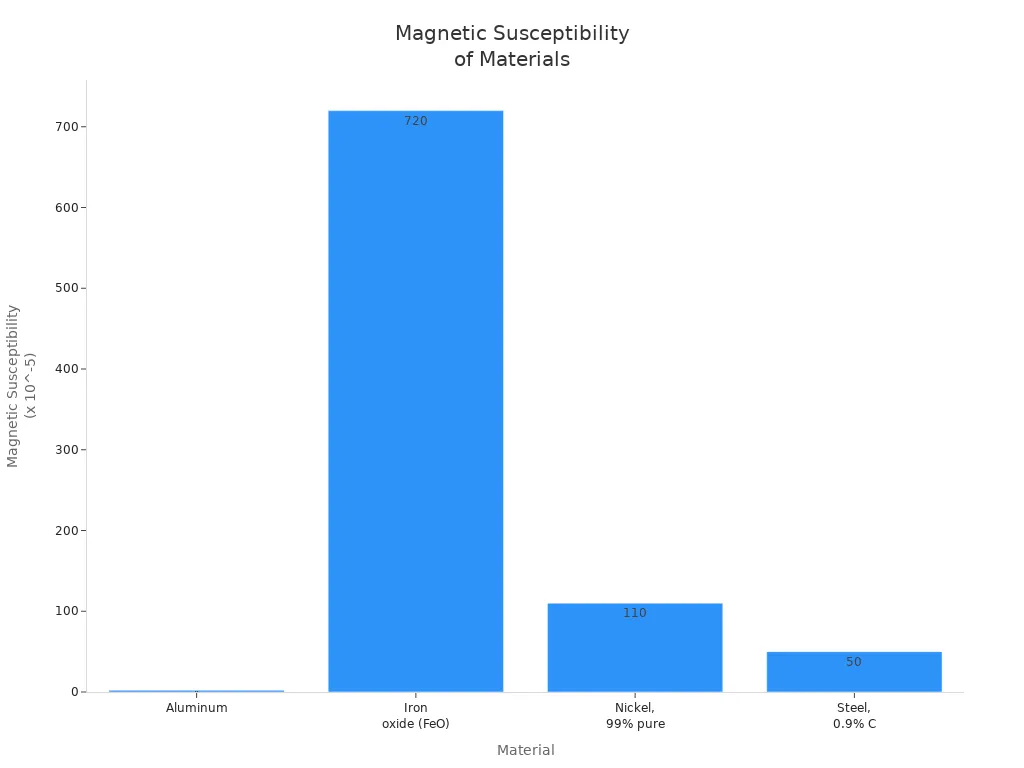
Iron and nickel have much bigger numbers than aluminum. This means they react strongly to magnets. Aluminum does not change much near magnets. This makes aluminum alloys good for places where magnetism is a problem.
Not all metals act the same near magnets. Stainless steel comes in many types. Austenitic stainless steel is usually not magnetic. It can become a little magnetic after bending. Martensitic and ferritic stainless steels are often magnetic. Their crystal shapes help them be magnetic.
Copper and aluminum alloys are not magnetic. They do not stick to magnets. The table below compares these metals:
| Metal | Magnetic Property |
|---|---|
| Aluminum | Non-magnetic; not attracted to magnets. |
| Austenitic Stainless | Generally non-magnetic; may show slight magnetism after cold working. |
| Martensitic Stainless | Typically magnetic due to its body-centered cubic (BCC) structure. |
| Ferritic Stainless | Generally magnetic; structure similar to iron supports magnetism. |
| Copper | Non-magnetic; not attracted to magnets. |
Aluminum alloys are also very light. The table below shows how light they are compared to other metals:
| Metal | Density (g/cm³) |
|---|---|
| Aluminum | 2.70 |
| Iron | 7.87 |
| Copper | 8.96 |
| Zinc | 7.14 |
| Lead | 11.34 |
| Titanium | 4.50 |
| Magnesium | 1.74 |
| Gold | 19.32 |
| Silver | 10.49 |
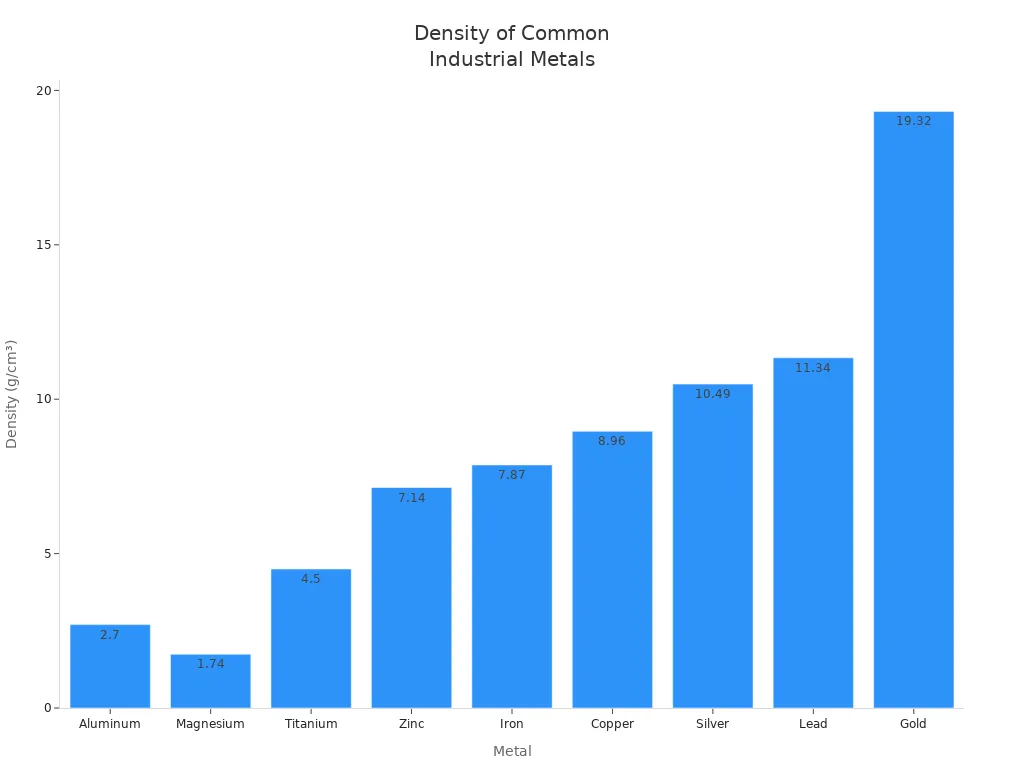
Aluminum alloys weigh less than most metals. This makes them great for planes and cars. Engineers pick non-magnetic aluminum for medical tools and electronics. They want to stop magnetic problems and make things lighter.
Tip: Non-magnetic aluminum and aluminum alloys protect equipment from unwanted magnetic effects.

Image Source: pexels
Aluminum’s magnetism does not change much, even in tough places. Many factories need materials that do not mess with magnetic fields. Non-magnetic aluminum is good for these jobs because its magnetism stays weak and steady. This makes it a smart pick where strong magnetism could cause trouble.
Some industries use non-magnetic aluminum for special needs:
Aerospace and defense use it in planes and radar to stop magnetic problems.
Medical devices, like MRI machines, need it to keep pictures clear and people safe.
Electronics and chip factories use it to protect tiny chips from bad magnetic fields.
Scientific tools use it for correct measurements.
Marine and offshore gear use it to stop rust and avoid magnetic issues.
Phone and energy companies use it to keep signals clear and systems safe.
Aluminum’s magnetism also helps in cars and gadgets. Even small changes in magnetism can mess up these things. Engineers pick aluminum alloys because they are light and have low magnetism.
But aluminum has some limits in places with high-frequency electromagnetic waves:
| Limitation | Description |
|---|---|
| Not good for low-frequency magnetic shielding | Aluminum does not block low-frequency magnetic fields well. |
| Softer and easier to bend | The material is soft and can bend under weight. |
| Needs thicker pieces to be as strong as steel | Aluminum must be thicker to match steel’s strength. |
TAIXIONG knows how important it is to control magnetism in factories. The company gives smart solutions for using non-magnetic aluminum, especially in recycling and metal work. The TAIXIONG Eddy Current Separator is a top product. This machine sorts non-ferrous metals, like aluminum, from mixed stuff. It works great in recycling old electronics and metal plants.
TAIXIONG has more than 20 years of experience with magnetic machines. Their products help factories handle aluminum’s magnetism and work better. The company’s skills make sure businesses use non-magnetic aluminum without worrying about magnetism. TAIXIONG’s solutions help keep work safe, reliable, and efficient in many areas.
Tip: Picking the right machine for aluminum magnetism can make work safer and save money in factories.
Non-magnetic aluminum is important in many places. Engineers pick it because it is light and not very magnetic. They use it in planes, cars, and trains. This helps keep machines safe from magnetic problems.
In aerospace and electronics, aluminum protects sensitive tools. It keeps navigation and control systems working well. Aluminum cases help electronics work better by keeping fields steady.
Non-magnetic aluminum lowers magnetic problems in planes and satellites.
It helps navigation and control systems stay correct.
Aluminum cases protect signals and help devices work well.
People use aluminum at home and work too. It does not stick to magnets, so it is good for food packs and window frames. The way aluminum reacts to magnets makes it a smart pick where strong magnets could cause trouble.
Hospitals and labs need safe materials for scans. Non-magnetic aluminum keeps MRI rooms safe. It does not fly around in strong magnetic fields. This metal helps doctors get clear pictures by stopping blurry spots.
Non-magnetic aluminum stops accidents in MRI rooms.
It keeps scan tools safe and working right.
The way aluminum reacts to magnets helps protect people and workers.
TAIXIONG is a leader in magnetic technology. The company makes machines that use non-magnetic aluminum for safety and speed. TAIXIONG’s new ideas help industries work safer and better every day.
Note: Picking the right materials can help keep people safe and make things work well.
Aluminum does not act like a magnet. Scientists call it a paramagnetic metal. The table below shows how it is different from ferromagnetic metals:
| Property | Paramagnetic Metals | Ferromagnetic Metals |
|---|---|---|
| Magnetization | Weak, temporary | Strong, permanent |
| Retention | Does not retain magnetism | Retains magnetism |
| Examples | Aluminum, copper, gold | Iron, nickel, cobalt |
Engineers like aluminum for many reasons. It does not rust easily. It is light and easy to use. It does not stick to magnets. It can handle many chemicals without damage.
Students ask questions about aluminum. Is aluminum magnetic? The answer is no. Can a magnet pick up aluminum? No, it cannot. Are aluminum foils and cans magnetic? No, they are not.
Knowing these facts helps people pick safe and smart materials.
Aluminum does not act magnetic in everyday life. Scientists say it is paramagnetic. It reacts very weakly to magnets. Most people cannot notice this without special tools.
Magnets make eddy currents inside aluminum. These currents push back on the magnet. People feel a soft drag or resistance. This does not mean aluminum is magnetic.
Aluminum cannot block steady magnetic fields. It works better for blocking electric fields. Engineers use steel for magnetic shielding instead.
Not all metals stick to magnets. Only ferromagnetic metals, like iron and nickel, are strongly attracted. Aluminum, copper, and gold do not stick to magnets.
Industries pick non-magnetic aluminum to stop magnetic problems. It keeps machines safe and signals clear. Aluminum also makes cars, planes, and electronics lighter.


