
Language
Views: 0 Author: Site Editor Publish Time: 2025-11-12 Origin: Site


A flexible magnet can bend and twist. It does not break when you bend it. Flexible magnets are made by mixing rubber with ferrite powder. These magnets are different from regular magnets. They stay strong even after you bend them. They do not get weak from stress in the environment. You can find these magnets in cars, ads, and many products people use.
| Feature | Flexible Magnets | Traditional Magnets |
|---|---|---|
| Composition | Magnetic particles mixed in a stretchy material | Solid blocks made from rare earth materials |
| Durability | Stay strong after you bend them | Can get weak and break easily |
Flexible magnets can bend and twist easily. They do not break when you move them. This makes them great for art projects. They are also good for many other uses.
Pick isotropic magnets for easy jobs like crafts. You can also use them for ads. Use anisotropic magnets for jobs that need more strength. These are better for machines and tools.
Always look at safety rules before using magnets. This helps you stay safe. It also stops accidents from happening.
There are two main kinds of flexible magnets. Isotropic magnets work the same in every direction. These magnets cost less. They are good for simple jobs. You see them in sheets, tapes, and ads. Anisotropic magnets have one strong direction. This makes them stronger. They are better for tough jobs. You use them in special tools and machines.
Here is a table that shows how isotropic and anisotropic flexible magnets are different:
| Property | Isotropic Magnets | Anisotropic Magnets |
|---|---|---|
| Magnetic Strength | Lower (500-800 Gauss) | Higher (800-1,400 Gauss) |
| Cost | Cheaper | More expensive |
| Raw Material | Granular raw material | Powdered raw materials |
| Size | 3-4 μm | 0.85± 0.1 μm |
| Applications | Magnetic tapes and sheets | Various high-performance applications |
Isotropic magnets are used for fridge magnets and business cards. They are also used for toys. Anisotropic magnets are used in tiny motors and printer parts. They are also used in sensors.
Tip: Pick isotropic magnets for crafts or ads. Pick anisotropic magnets for machines or tools that need more power.
Flexible magnets can bend and twist. They do not break when you shape them. You can cut them to fit many things. This is great for art and work projects. You can make special shapes for displays or closures.
Some important things about flexible magnets are:
You can bend them and they do not break.
You can cut them into any shape or size.
Their density is about 3.7 g/cm³.
Their hardness is 95 Hv.
You can stretch them up to 60 percent.
Flexible magnets are made from ferrite powder and rubber resin. This mix lets you shape them for many uses. You see flexible magnets in copier blades and painting masks. They are also used for crafts. They fit many surfaces, so they are useful for art and work.
Here is a table that shows ways to measure flexible magnet strength:
| Measurement Method | Description |
|---|---|
| Magnetometer/Gaussmeter | Measures the magnetic field at a point using Hall effect or magneto induction. |
| Fluxmeter | Measures the total magnetic field passing through a space. |
| Magnetic Pull Tests | Measures the force needed to pull a metal piece away from the magnet. |
Flexible magnets help you design and solve problems. You can use them for ads, closures, and machines. Their ability to bend and be shaped makes them a smart choice for many jobs.
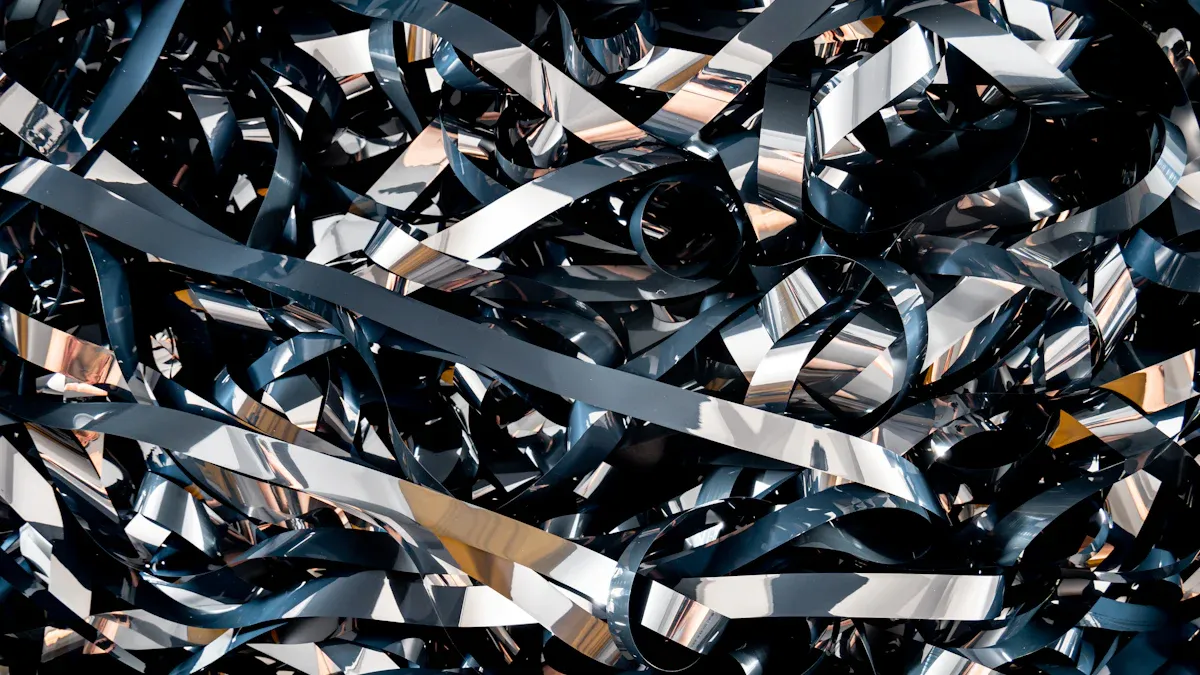
Image Source: pexels
Flexible magnets are made in a few steps. First, you mix magnetic powder with a binder. This makes a wet mixture. Next, you shape the mixture by squeezing it through a die or pressing it with rollers. Extrusion means you push the hot mixture through a mold, then cool and magnetize it. Calendering means you press the mixture between rollers to make flat sheets. You keep rolling until you get the thickness you want. Then, you cut it to the right size and magnetize it.
Quality control is important for making good magnets. Here is a table that shows some checks:
| Quality Control Measure | Description |
|---|---|
| Incoming Inspection | Checks if raw materials are pure using special tools. |
| Routine Inspection | Measures thickness with calipers and microscopes. |
| Coating Quality Inspection | Tests like Salty Spray and Collision Test for coating strength. |
| Acceptable Quality Level | Daily checks with strict rules. |
| Production Management | Online systems track materials and quality for ISO standards. |
Some systems measure magnetic fields and make detailed maps. These systems help test magnets fast and well.
Flexible magnets work because of their special mix. Inside, tiny magnetic particles sit in a soft base. When you use a magnetic field, the particles line up. This makes the magnet pull strongly. Heat can help the particles move and stay in place. This lets you set how strong and which way the magnet works.
Many things change how flexible magnets work. You need to think about how you mix the materials and treat the films. The size and spread of the particles matter. The drying temperature also changes the magnet.
Flexible magnets stick to things like iron. You use them in sheets, tapes, and other products. They bend and shape easily, so they are good for many jobs.

Image Source: unsplash
Flexible magnets are used in lots of places. You see them on signs and decorations. They help organize your home and office. People use them for ads, electronics, and packaging. They are good for creative designs. Flexible magnets work well for displays and car signs. They are used for promotional items too. Stores sell magnetic sheets for printing pictures. You can make stickers for crafts with these sheets.
| Application Type | Examples |
|---|---|
| Vehicle Signage | Magnetic vehicle advertisements |
| Visual Graphics | Displays and promotional materials |
| Indoor Signage | Signs inside buildings |
| Outdoor Signage | External advertising |
| Promotional Magnets | Marketing campaigns |
| Refrigerator Magnets | Household items |
| Educational Magnets | Teaching and learning tools |
| Magnetic Toys | Toys with magnets |
| Craft/Home/Office Supplies | DIY and office projects |
| Decoration Magnets | Decorative purposes |
| OEM Applications | Custom solutions for equipment manufacturers |
Flexible magnets are used in electronics for sensors. They help make actuators work. In packaging, magnets keep boxes closed. In healthcare, magnets connect medical device parts. Craft stores sell magnetic stickers and sheets for projects. More people want printable magnetic sheets now. This is because ads, schools, and stores need flexible magnets.
Note: Flexible magnets help you make cool displays. They also make packaging easy to reuse. Many magnetic sheets can be recycled. This helps the environment.
Flexible magnets and traditional magnets are not the same. You pick flexible magnets when you need to bend or cut them. They are good for projects that need special shapes. Traditional magnets are better for strong jobs. They work well when you need steady magnetism.
| Feature | Flexible Magnets | Traditional Magnets |
|---|---|---|
| Composition | Magnetic powder mixed with flexible materials | Hard materials, sintered or cast |
| Flexibility | Bendable and easy to shape | Rigid and fragile |
| Magnetic Strength | Weaker magnetic force | Strong and stable magnetism |
| Applications | Complex shapes, advertising, toys | High-performance scenarios |
| Weight | Lightweight and easy to cut | Heavier and harder to process |
| Corrosion Resistance | Resistant and anti-aging | Varies by material |
| Cost | Lower cost | Higher cost |
| High-Temperature Resistance | Poor resistance, may deform | Better resistance, keeps properties under heat |
| Durability | Long life, may degrade with bending | Durable, can be brittle under stress |
Flexible magnets cost less and do not rust easily. You use them for stickers and ads. They are also good for creative work. Traditional magnets are best for motors and sensors. They work well in hot places.
Flexible magnets have many good points. You can bend and cut them into any shape. This helps you make cool ads and packages. You save money because they cost less than vinyl. These magnets last a long time. They do not fade or peel. You can use them outside and they still work well.
| Advantage | Description |
|---|---|
| Versatility | Bend, twist, and cut into any shape for creative designs |
| Cost-effectiveness | Save money compared to traditional printing and laminating |
| Durability | Do not fade, curl, or peel; withstand weather conditions |
| Unique Design Opportunities | Enable new design ideas and efficient manufacturing |
Flexible magnets have some downsides. They are not as strong as hard magnets. If it gets too hot, they lose power. You need to pick the right magnet for your job.
| Disadvantage | Description |
|---|---|
| Low magnetic pull | Weaker force than rigid magnets |
| Decrease in magnetism at high temperatures | Magnetism drops above 100°C |
Tip: Use flexible magnets for crafts and ads. Pick traditional magnets for strong jobs or high heat.
Flexible magnets help you make products that last. Many sheets use recyclable materials. Magnet fasteners work for a long time. They help you use less waste. You can reuse boxes with magnetic closures. This is good for the planet.
| Evidence Type | Description |
|---|---|
| Recyclable Materials | Flexible magnet sheets use 75% recyclable materials, all pre-consumer. |
| Durability | Magnet fasteners keep their force, so you use them again and again. |
| Reusable Packaging | Rigid boxes with magnetic closures work for gifts or storage, promoting sustainability. |
| Eco-Friendly Practices | Magnetic packaging shows you care about the environment. |
You need to pick the right magnet for your project. Think about the temperature where you will use it. Check if the magnet will touch steel or aluminum. Measure the size and shape you need. Decide if the magnet will be used alone or with other things. Some magnets need coatings to protect them.
Here are tips for choosing flexible magnets:
Operating Temperature: Make sure the magnet works at the temperature you need.
Environmental Conditions: Check if the magnet will touch steel, aluminum, or corrosive materials.
Dimensional Constraints: Measure the size and shape for your project.
Integration: Decide if the magnet will be part of an assembly or used alone.
Coating Requirements: Use coatings like nickel, epoxy, or plastic for extra protection.
Neodymium magnets are strong. Samarium cobalt magnets work in hot or rusty places. Nickel coatings are good for most uses. Epoxy coatings help in wet or chemical places. Gold coatings are used for medical tools.
Be careful when you use flexible magnets. Magnets can snap together and hurt your fingers. Keep your workspace clean. This stops metal bits from sticking to magnets. Wear gloves to protect your skin. Store magnets safely. Keep magnets away from electronics.
Here is a list of safety tips for using flexible magnets:
Use cut-resistant gloves to avoid pinches and cuts.
Wear nitrile gloves to keep magnets clean.
Use spacers to keep magnets apart.
Handle magnets with rubber-coated pliers.
Move large magnets with magnetic lifters.
Keep magnets dry to protect them. Use coatings like nickel-copper-nickel, epoxy, zinc, or plastic. Store magnets in a dry place to keep them strong.
Flexible magnets must follow safety rules. Some rules are ASTM F963 for toys and RoHS for electronics. These rules help keep you safe.
| Regulation | Description |
|---|---|
| 16 CFR Part 1262 | Safety rules for magnet products to prevent swallowing hazards |
| ASTM F963 | Safety standard for toys with magnets |
| ASTM F3458 | Rules for labeling adult magnet sets |
| ASTM F2999 | Safety for adult jewelry with magnets |
| California Proposition 65 | No toxic chemicals in consumer products |
| RoHS | Limits hazardous substances in electronics |
Tip: Always check safety rules before you buy magnets. This keeps everyone safe.
Flexible magnets give you lots of choices. You use them for ads, packaging, and crafts. You can bend, cut, and shape them for many needs.
You can use flexible magnets for lots of things. They work for creative projects and in factories. The table below lists their main features:
| Key Point | Description |
|---|---|
| Definition | Flexible magnets bend but still work well. |
| Flexibility | You can shape them for tricky jobs. |
| Durability | They last a long time and do not rust. |
| You can use this magnet to organize stuff. You can decorate with it or make equipment better. New ideas make these magnets even more helpful. |
You find flexible magnets made from ferrite powder mixed with rubber or plastic. This mix lets you bend and cut them for many uses.
Yes, you can print on flexible magnets. You use them for signs, labels, and crafts. Many printers work with magnetic sheets.
You should keep small magnets away from young children. Swallowing magnets can cause harm. Always follow safety rules when using magnets in toys or crafts.


